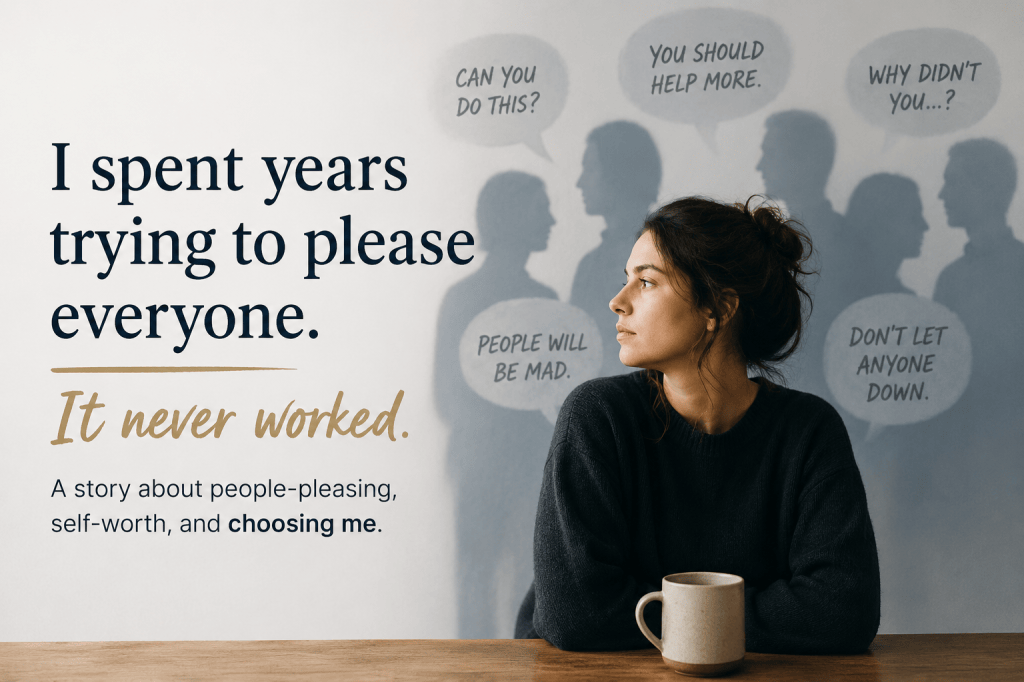
For most of my early years, I lived by an unspoken rule: say yes.
Yes to the extra task. Yes to the plan I didn’t want to be part of. Yes to opinions I didn’t agree with, just so I wouldn’t have to sit in the discomfort of someone being unhappy with me. I didn’t call it people-pleasing back then; I called it being agreeable, being easy to work with, and being nice. It felt like a virtue. It wasn’t. It was fear wearing a polite mask.
I think it came from inexperience more than anything else. When you don’t yet know your own worth, you borrow it from other people’s approval. Every “yes” felt like a small deposit into an account I thought I needed for acceptance, likability, and safety. I didn’t realize I was spending myself to fund it.
The cost showed up slowly.
It wasn’t one dramatic moment that broke the pattern. It was the quiet accumulation of exhaustion, agreeing to things I resented, showing up for people who wouldn’t have shown up for me, and losing track of what I actually wanted because I was so busy managing what everyone else wanted from me. Somewhere in there, I noticed a simple, uncomfortable truth: the people I was trying hardest to please rarely noticed the effort. And the ones who did notice didn’t respect me more for it. If anything, they asked for more.
Then it clicked: pleasing everyone isn’t a skill. It’s an impossibility.
You cannot make every person happy with your choices, your boundaries, your time, or your work. Someone will always want a different version of you. Trying to be that version for everyone doesn’t make you well-liked; it makes you inconsistent, stretched thin, and strangely invisible, because a person shaped entirely by other people’s expectations doesn’t have a shape of their own.
So I started saying no.
Not out of spite, not as a rebellion, just as a return to something more honest. No to obligations that drained me without purpose. No to opinions I didn’t hold, just to keep the peace. No to being available for everyone at the cost of being present for the people and things that actually mattered.
It didn’t feel good at first. Every “no” came with a flicker of guilt, a fear that I was becoming someone difficult, someone selfish. But over time, something shifted. The guilt faded, and in its place came something steadier: clarity. I started making decisions based on what I actually valued, not on what would keep the most people comfortable.
Now I live by my own principles, not the shifting expectations of a crowd.
That doesn’t mean I’ve become closed off or hard to work with. I still care about people, still show up, and still say yes often. But it’s a yes I choose, not one I default to out of fear. And when it’s a no, it’s not an act of rejection; it’s an act of self-respect.
If there’s one thing I’d tell my younger self, it’s this: you were never actually pleasing everyone. You were just quietly disappointing yourself to avoid disappointing others. Learning to say no didn’t make me less kind. It made me more honest with other people and with myself.
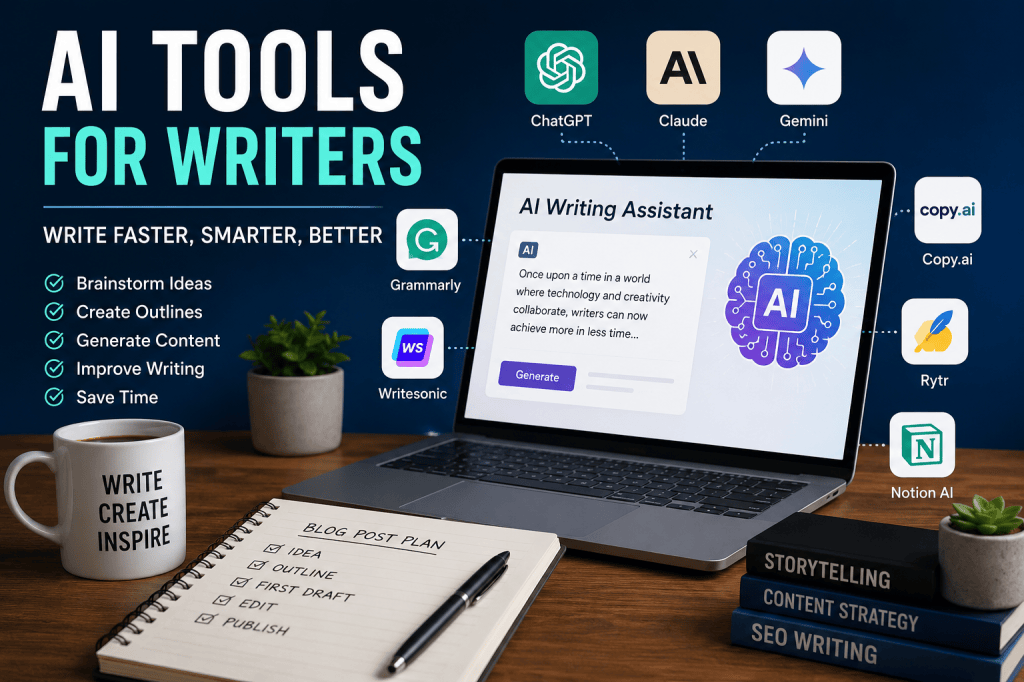
Artificial intelligence has transformed the way writers work. Whether you’re a blogger, novelist, freelancer, student, journalist, or content creator, AI tools can help you brainstorm ideas, improve grammar, generate outlines, optimize SEO, and even overcome writer’s block.
The key is understanding that AI is not here to replace writers—it is here to assist them. The best writing still comes from human creativity, experience, and judgment. AI simply helps you work more efficiently.
In this guide, we’ll explore the best AI writing tools available in 2026 and how each one can improve your writing workflow.
1. ChatGPT
One of the most versatile AI assistants available today, ChatGPT can help writers with:
Brainstorming article ideas
Writing outlines
Drafting blog posts
Editing and proofreading
Creating social media content
Research assistance
Email writing
SEO-friendly content
Best for:
Bloggers
Freelance writers
Content creators
Students
Business owners
2. Claude
Claude is well known for handling long documents and maintaining a natural writing style.
It excels at:
Editing lengthy articles
Summarizing research
Improving readability
Maintaining consistent tone
Reviewing manuscripts
Best for:
Authors
Researchers
Technical writers
3. Google Gemini
Gemini integrates well with Google’s ecosystem, making it useful for writers who frequently use Google Docs, Gmail, and Drive.
Features include:
Research assistance
Writing support
Brainstorming
Fact organization
Productivity improvements
4. Grammarly
Grammarly remains one of the most trusted writing assistants.
It helps with:
Grammar correction
Spelling
Punctuation
Tone detection
Clarity improvements
Even experienced writers benefit from a final Grammarly check before publishing.
5. Jasper AI
Jasper specializes in marketing content.
Ideal for creating:
Blog posts
Landing pages
Product descriptions
Facebook ads
Email campaigns
Businesses and marketers use Jasper to speed up content production.
6. Notion AI
If you organize your writing projects inside Notion, the built-in AI assistant can:
Summarize notes
Generate outlines
Rewrite paragraphs
Create meeting notes
Organize research
7. Sudowrite
Sudowrite was built specifically for fiction writers.
It assists with:
Character development
Dialogue
Story expansion
Scene descriptions
Creative brainstorming
Novelists often use it as a collaborative creative partner.
8. Hemingway Editor
Hemingway focuses on readability.
It identifies:
Long sentences
Passive voice
Complex wording
Difficult paragraphs
The goal is to make your writing easier to understand.
9. QuillBot
QuillBot is widely used for paraphrasing and rewriting.
Useful features include:
Sentence rewriting
Grammar checking
Summarization
Citation assistance
Always review AI-generated rewrites to ensure they accurately reflect your intended meaning.
10. Perplexity AI
Perplexity combines AI with web search.
It is useful for:
Finding sources
Research
Fact checking
Discovering references
This makes it valuable during the research phase of writing.
11. Canva Magic Write
Content creators who design graphics can also generate captions, presentations, and short articles directly within Canva.
Ideal for:
Instagram captions
Presentation text
Marketing copy
Visual storytelling
12. Rytr
Rytr offers a simple interface for creating:
Blog ideas
Product descriptions
Emails
Short-form content
It is beginner-friendly and affordable.
13. Copy.ai
Copy.ai focuses on business writing.
Popular use cases include:
Sales emails
Marketing copy
Website content
Product pages
14. Writesonic
Writesonic combines AI writing with SEO features.
It helps produce:
Long-form articles
Landing pages
Product descriptions
AI-assisted research
15. Frase
Frase is designed for SEO content writers.
It assists with:
Keyword research
Competitor analysis
Content optimization
Search intent analysis
Many bloggers use Frase to improve their chances of ranking on Google.
Can AI Replace Human Writers?
The short answer is no.
AI can generate words quickly, but it cannot fully replace human creativity, lived experiences, emotional understanding, critical thinking, or unique perspectives. The best results come from combining AI’s speed with human expertise.
Think of AI as a writing assistant—not the author.
Tips for Using AI Responsibly
Always fact-check AI-generated information.
Add your own experiences and opinions.
Edit every draft before publishing.
Avoid copying AI output without review.
Maintain your unique writing style.
Cite sources when appropriate.
Follow the content policies of the platform where you publish.
Final Thoughts
AI has become an essential companion for modern writers. From generating ideas to polishing final drafts, these tools can save hours of work while improving productivity.
However, the most successful writers in 2026 are those who use AI wisely, not those who rely on it completely. Your creativity, voice, and personal insights remain your greatest strengths.
Experiment with different AI tools, discover the ones that fit your workflow, and use them to enhance your writing rather than replace it.
If used responsibly, AI can help every writer become more productive, more consistent, and more confident.
What AI writing tool do you use most often? Share your experience in the comments below!
When people say, “Never mess with a Gurkha,” they aren’t encouraging fear; they’re expressing deep respect for one of the most courageous and disciplined groups of soldiers in military history.
For more than 200 years, Gurkhas have earned a worldwide reputation for bravery, loyalty, professionalism, and unwavering determination. Their remarkable service has made them legendary among military forces across the globe.
Who Are the Gurkhas?
Gurkhas are soldiers from Nepal who have served with distinction in the British Army, the Indian Army, and other military organizations. Their story began in the early 19th century when the British were so impressed by the courage and fighting skills of Nepali warriors that they began recruiting them.
Today, Gurkhas continue to serve with honor in peacekeeping missions, disaster relief operations, and military assignments around the world.
Why Are Gurkhas So Respected?
Extraordinary Courage
Gurkhas have earned a reputation for remaining calm and determined even in the most dangerous situations. Throughout history, many have displayed remarkable bravery while protecting their fellow soldiers and completing difficult missions.
Extremely Competitive Selection
Thousands of young Nepalis apply every year to become Gurkhas, but only a small number are selected. Candidates must pass demanding physical fitness tests, educational exams, interviews, and endurance challenges.
Becoming a Gurkha is considered one of the greatest honors in Nepal.
World-Class Training
Once selected, recruits undergo intensive military training that develops discipline, leadership, teamwork, physical fitness, and tactical skills.
Their preparation enables them to perform effectively in a wide variety of environments and operations.
The Famous Kukri
The Gurkha’s traditional curved knife, known as the kukri, is one of the world’s most recognizable military symbols.
It is more than a weapon; it represents courage, heritage, duty, and honor.
Loyalty and Professionalism
Military leaders across generations have admired Gurkhas for their loyalty, humility, and professionalism.
Their commitment to duty has earned respect from allies and former adversaries alike.
A Legacy Built on Honor.
Over two centuries, Gurkhas have served in numerous conflicts and peacekeeping missions around the world.
Many have received prestigious military awards for acts of extraordinary courage, demonstrating that their legendary reputation is based on real achievements rather than myths.
What Does “Never Mess with a Gurkha” Really Mean?
The phrase has become popular because people recognize the Gurkhas’ remarkable courage and discipline.
It should not be interpreted as encouraging violence.
Instead, it is a tribute to a military tradition built on bravery, integrity, and selfless service.
Lessons We Can Learn
The Gurkha legacy teaches valuable life lessons:
Courage during difficult times.
Discipline in everyday life.
Respect for others.
Loyalty to friends and teammates.
Commitment to excellence.
Humility despite great achievements.
These qualities inspire people far beyond the military.
Final Thoughts
The Gurkhas have earned worldwide admiration through generations of honorable service.
Their courage, discipline, humility, and professionalism continue to inspire millions around the world.
The next time you hear someone say “Never mess with a Gurkha,” remember that the phrase is really a recognition of one of history’s most respected military traditions.
Disclaimer: This article is intended for educational and historical purposes. It honors the legacy of the Gurkhas and does not encourage violence or hostility toward any individual or group.
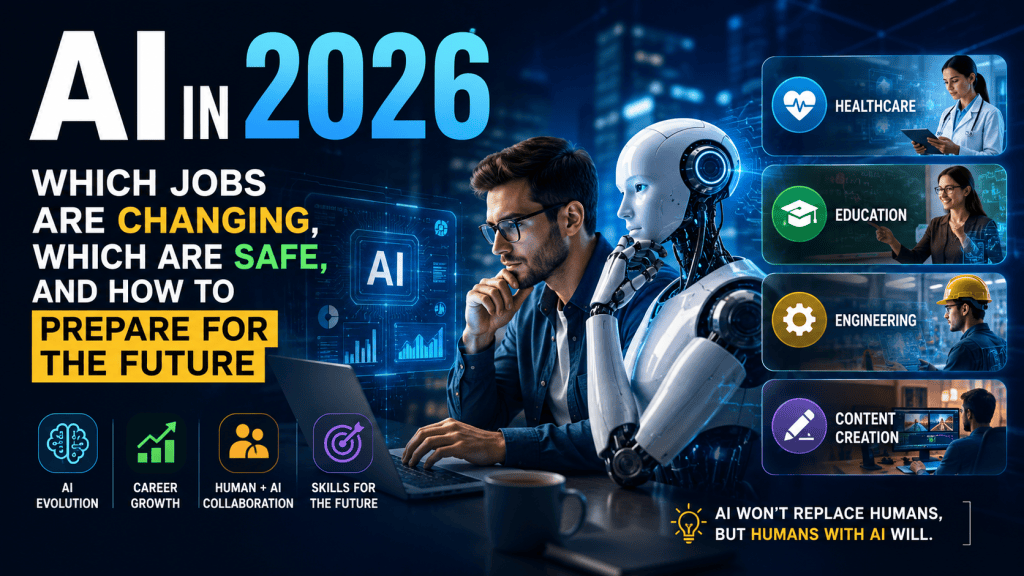
How Artificial Intelligence is reshaping careers, creating new opportunities, and helping professionals prepare for the future of work.
Artificial Intelligence (AI) has moved beyond science fiction and research laboratories. In 2026, it has become an essential part of everyday life, influencing the way people communicate, work, learn, shop, travel, and create content. From virtual assistants and automated customer service to medical diagnostics and software development, AI is transforming industries at an unprecedented pace.
As this transformation continues, one question dominates conversations worldwide:
Will AI replace human jobs?
The answer is more balanced than many headlines suggest. While AI is automating repetitive tasks and changing the nature of many occupations, it is also creating new opportunities, increasing productivity, and enabling people to focus on work that requires creativity, critical thinking, and human judgment.
Understanding these changes is essential for professionals, students, entrepreneurs, and businesses looking to succeed in the years ahead.
Why AI Is Growing So Quickly.
Several factors have accelerated AI adoption across industries.
Cloud computing has become more affordable, powerful AI models are now accessible to businesses of all sizes, and organizations are increasingly looking for ways to improve efficiency while reducing operational costs.
Businesses are also using AI to:
Automate repetitive tasks
Improve customer experiences
Analyze large volumes of data
Generate reports and content
Enhance cybersecurity
Support decision-making
Rather than replacing entire organizations, AI is becoming a valuable tool that supports human expertise.
Jobs Most Likely to Change.
Some professions involve repetitive and predictable tasks that AI can perform efficiently.
Examples include:
Basic data entry
Appointment scheduling
Routine bookkeeping
Standard customer support
Simple content drafting
Basic translation
Administrative paperwork
This doesn’t necessarily mean these careers will disappear. Instead, professionals working in these areas are increasingly learning to supervise AI systems, verify outputs, and handle more complex responsibilities.
Careers That Continue to Grow.
Many careers depend on human creativity, empathy, ethical judgment, and interpersonal communication—qualities AI cannot fully replicate.
These include:
Healthcare.
Doctors, nurses, therapists, and healthcare specialists continue to provide patient care that requires compassion, experience, and informed decision-making.
Education.
Teachers and educators do far more than deliver information. They mentor students, encourage critical thinking, and adapt lessons to individual learning styles.
Skilled Trades.
Electricians, mechanics, plumbers, technicians, and construction professionals perform practical work in constantly changing environments where human expertise remains essential.
Creative Industries.
Designers, filmmakers, writers, photographers, artists, and musicians increasingly use AI as a creative assistant rather than a replacement.
Software Development.
AI can generate code and assist with debugging, but software engineers still design systems, solve complex challenges, and ensure quality and security.
New Careers Emerging in 2026.
AI has also created entirely new career opportunities.
Growing roles include:
AI Trainer
Prompt Engineer
AI Content Editor
AI Ethics Specialist
Machine Learning Engineer
Automation Consultant
AI Product Manager
AI Security Analyst
Data Annotation Specialist
Human-AI Collaboration Specialist
These professions demonstrate that technological progress often creates new jobs alongside changing existing ones.
Skills That Will Matter Most.
Success in the AI era depends on combining technical knowledge with uniquely human abilities.
The most valuable skills include:
Critical thinking
Creativity
Problem solving
Communication
Leadership
Adaptability
Emotional intelligence
Digital literacy
Data analysis
Continuous learning
People who embrace lifelong learning are more likely to adapt successfully to technological change.
How AI Benefits Individuals and Businesses.
Artificial Intelligence offers advantages for both professionals and organizations.
Businesses can improve efficiency by automating repetitive work, while individuals can use AI to save time, organize information, generate ideas, and increase productivity.
Content creators, marketers, educators, freelancers, and entrepreneurs are already using AI to:
Brainstorm ideas
Improve writing
Create presentations
Generate subtitles
Produce marketing content
Analyze customer feedback
Plan social media campaigns
When used responsibly, AI acts as a productivity partner rather than a replacement for human expertise.
Common Misconceptions About AI.
AI Will Replace Everyone.
AI changes tasks more often than entire professions. Most careers will evolve instead of disappearing completely.
Only Technology Professionals Need AI.
People across healthcare, education, business, finance, agriculture, media, and government are increasingly using AI tools.
AI Is Too Difficult to Learn.
Many modern AI tools require no programming knowledge and are designed for beginners.
Practical Tips for Preparing for the Future.
If you want to remain competitive in the years ahead:
Learn at least one AI tool.
Strengthen communication skills.
Continue learning throughout your career.
Build a digital portfolio.
Develop problem-solving abilities.
Combine AI with your existing expertise.
Stay informed about technological developments.
Small improvements made consistently often produce significant long-term benefits.
Final Thoughts.
Artificial Intelligence is transforming the workplace, but the future is not about humans competing against machines.
Instead, it is about humans using AI to become more productive, creative, and innovative.
Those who remain curious, continue learning, and embrace new technologies responsibly will be well-positioned for future opportunities.
The question is no longer whether AI will influence our lives.
The real question is:
How will you use AI to shape your future?
Frequently Asked Questions.
Will AI replace every job?
No. AI is expected to automate specific tasks while many professions continue to require human creativity, empathy, leadership, and decision-making.
Which careers are considered more resilient?
Healthcare, education, engineering, skilled trades, research, leadership, and creative industries are expected to remain important because they depend heavily on human expertise.
Should students start learning AI?
Yes. Understanding AI tools can improve productivity and prepare students for future workplaces across many industries.
Can small businesses benefit from AI?
Absolutely. AI can automate repetitive work, improve customer service, assist with marketing, and help businesses become more efficient.
Disclaimer
This article is provided for informational and educational purposes only. Technology and workplace trends evolve rapidly, and individual career or business decisions should be based on personal circumstances and additional research. Readers are encouraged to consult qualified professionals when making important career, financial, or business decisions.
I speak English every day and also use my mother tongue when communicating with family, relatives, and people in my community. Knowing more than one language has been a valuable part of my life.
Language is much more than a way of speaking; it is a bridge that connects us to people, cultures, and opportunities. My mother tongue helps me stay connected to my roots, traditions, and identity. It allows me to communicate naturally with elders and preserve the cultural values passed down through generations.
English, on the other hand, has opened many doors for me. It has helped me in education, work, accessing information, and connecting with people from different parts of the world. Through English, I can learn new skills, read books and articles, use technology more effectively, and share my thoughts with a wider audience.
Being able to communicate in different languages has also taught me to appreciate diversity and understand different perspectives. It has made me more confident when meeting new people and has enriched both my personal and professional life.
In today’s interconnected world, knowing multiple languages is a great advantage. It not only improves communication but also helps build stronger relationships and creates opportunities that might otherwise be out of reach.
Every language I speak represents a different part of my journey, and together they have helped shape who I am today.
Learn what to do after a car accident in the USA, including legal steps, insurance tips, and how to protect your rights.
🚗 Introduction
Car accidents can happen unexpectedly. Knowing what to do immediately after an accident in the United States can protect your safety, finances, and legal rights.
✅ Step 1: Check for Injuries
Ensure your safety and the safety of others involved.
Call 911 if anyone is injured.
🚓 Step 2: Call the Police
A police report is crucial for:
Insurance claims.
Legal protection.
📸 Step 3: Gather Evidence
Take photos of:
Vehicle damage.
Road conditions.
License plates.
Collect:
Driver details.
Insurance information.
🏥 Step 4: Seek Medical Attention
Even minor injuries can worsen later. Always get checked.
📞 Step 5: Notify Your Insurance Company
Report the accident as soon as possible.
⚖️ Step 6: Consider Legal Help
If there are injuries or major damages, consult a personal injury lawyer.
👉 Read also: How to Find the Best Personal Injury Lawyer
❌ Common Mistakes to Avoid
Admitting fault.
Not documenting evidence.
Delaying medical care.
🧠 Final Thoughts
Taking the right steps after a car accident can make a huge difference in your claim and recovery.
⚠️ Disclaimer
This article is for informational purposes only and does not constitute legal advice. Always consult a qualified attorney in your state.
In today’s fast-moving digital world, we often chase speed, success, and endless online engagement. But sometimes, the most powerful lessons come from the simplest places, our villages.
Recently, I spent a few days away from the city, surrounded by greenery, calm roads, and a slower pace of life. That experience reminded me of something important: we don’t always need more — sometimes, we need less.
🌿 The Beauty of Slow Life.
Village life moves differently. There’s no constant noise of traffic, no pressure of deadlines every minute. Instead, you wake up to birds, fresh air, and natural rhythms.
This slower pace helps:
Reduce stress. Improve mental clarity. Reconnect with yourself.
When life slows down, you start noticing things you usually ignore, like the sound of wind through trees or the warmth of sunlight.
🚜 Hard Work and Real Value.
In rural areas, every task has real meaning. Whether it’s farming, building, or doing daily chores, people work with their hands and see the direct results of their effort.
This teaches us:
The value of patience. Respect for hard work. Gratitude for basic things like food and shelter. 🧠 Lessons for the Digital Generation.
As content creators, bloggers, and vloggers, we are always online. But village life reminds us to balance both worlds.
Here’s what we can learn:
Take breaks from screens. Stay grounded in reality. Create content that reflects real life, not just trends.
Sometimes, the best content ideas come when you disconnect.
🏍️ My Journey Back to the City.
Returning to the city after village life feels different. The noise, traffic, and rush come back, but your mindset changes.
You carry peace with you.
That’s the real power of stepping away for a while.
🌍 Final Thoughts.
Simple living doesn’t mean a small life. It means a meaningful one.
Whether you live in a city or a village, try to slow down sometimes. Appreciate what you have. Stay connected to your roots.
How long does it really take to make money from blogging? (honest timeline)
Blogging is often shown as a “quick money” idea, but the reality is very different. If you are starting a blog today, understanding how long it actually takes to earn money will save you frustration, burnout, and wrong expectations.
This article outlines a realistic timeline for blogging income, particularly for beginners.
The truth about blogging income
Blogging is not a get-rich-quick scheme. It is a long-term digital asset that grows slowly but steadily.
Most successful bloggers earn because:
They stayed consistent
They focused on useful content
They allowed time for search engines to trust their site
Month 0–3: The silent phase
What happens?
You publish articles
Very few people read them
Income is usually ₹0
Why does this happen?
New blogs have no authority
Google is still discovering your content
SEO takes time
What you should do:
Publish 1–2 high-quality articles per week
Focus on solving real problems
Do NOT worry about money yet
This phase tests patience, not skill.
Months 4–6: First signs of life
What happens?
Articles start appearing in search results
Small traffic begins
The first few ad clicks may appear
Expected income:
₹100 – ₹1,000 per month (very normal)
What matters now?
Consistency
Improving older articles
Writing longer, helpful content
Most bloggers quit here; those who don’t move ahead.
Month 7–12: Momentum phase:
What happens?
Multiple articles rank together
Traffic grows steadily
Ads start showing regularly
Expected income:
₹1,000 – ₹5,000 per month
Smart actions
Update old posts
Write evergreen content
Improve headlines and formatting
This is where blogging starts to feel “real.”
Year 2: Stability phase:
What happens?
Search engines trust your site
Old posts continue bringing traffic
New posts rank faster
Expected income:
₹5,000 – ₹20,000 per month
At this stage:
Blogging becomes semi-passive
One good article can earn for years
Many bloggers recover all initial costs
Year 3 and beyond: compounding phase
What happens?
Your content library works for you
Income compounds, not resets
You earn even without posting daily
Possible income:
₹25,000 – ₹1,00,000+ per month (depends on niche & effort.)
This is why blogging rewards patience over speed.
Why some bloggers never earn:
Common reasons:
Inconsistent posting
Copy-paste or low-quality content
Chasing shortcuts
Expecting fast money
Blogging rewards value + time, not tricks.
Blogging is a long game (And that’s a good thing.)
Unlike jobs or freelancing:
You are not paid per hour
Your old work keeps earning
Income grows with experience
One helpful article today can still pay you 5–10 years later.
Final advice for beginners:
If you are starting a blog:
Think in years, not weeks
Focus on helping readers
Trust slow, steady growth
Blogging does not make you rich quickly. But it can make you independent slowly.





 MindTrek Vlog